Workplace English
Contextualised training and coaching using authentic emails, reports, meetings, presentations and stakeholder interactions from the workplace.
Explore this service →I help specialist and regulated organisations improve workplace English, professional communication and vocational literacy through contextualised training, language analysis and learning design.
Melbourne, Australia
Online & in person
The proposition
In specialist and regulated environments, communication problems are operational problems. Unclear language can create rework, slow decisions, complicate onboarding and increase the risk of misunderstanding where precision matters.
I address those problems by analysing the real language demands of the work — technical vocabulary, professional genres, institutional expectations and high-stakes interactions — then designing support around them.
Services
Contextualised training and coaching using authentic emails, reports, meetings, presentations and stakeholder interactions from the workplace.
Explore this service →Targeted programs and resources built around the terminology, genres, interactions and performance expectations of a profession or industry.
Explore this service →A diagnostic review of workplace communication demands and bottlenecks, with prioritised findings and practical recommendations for documentation, onboarding and high-stakes communication.
Explore this service →Plain-English and contextualised learning resources that make specialist content more usable without stripping away technical meaning.
Explore this service →Where I can help
The same principle applies in both settings: start with the real work, identify the language and learning demands, then design support that fits the context.
For organisations where precision, clarity and confident communication affect operations, risk, onboarding or stakeholder outcomes.
Workplace English • language audits • professional writing • technical communicationExplore workplace support →For VET and education teams that need language, literacy, numeracy and digital support embedded in authentic vocational content and tasks.
Embedded LLND support • language-demand analysis • contextualised resources • learner supportExplore vocational support →Sector experience
I work with technical specialists to identify the language demands of their field, preserve integrity and make professional communication more learnable and usable.
The approach
Clarify the objective, people, context and constraints.
Examine authentic tasks, texts, terminology and interactions.
Create targeted learning, coaching, resources or recommendations.
Use modelling, guided practice, authentic scenarios and feedback.
Evaluate application, confidence and progress.
Selected examples
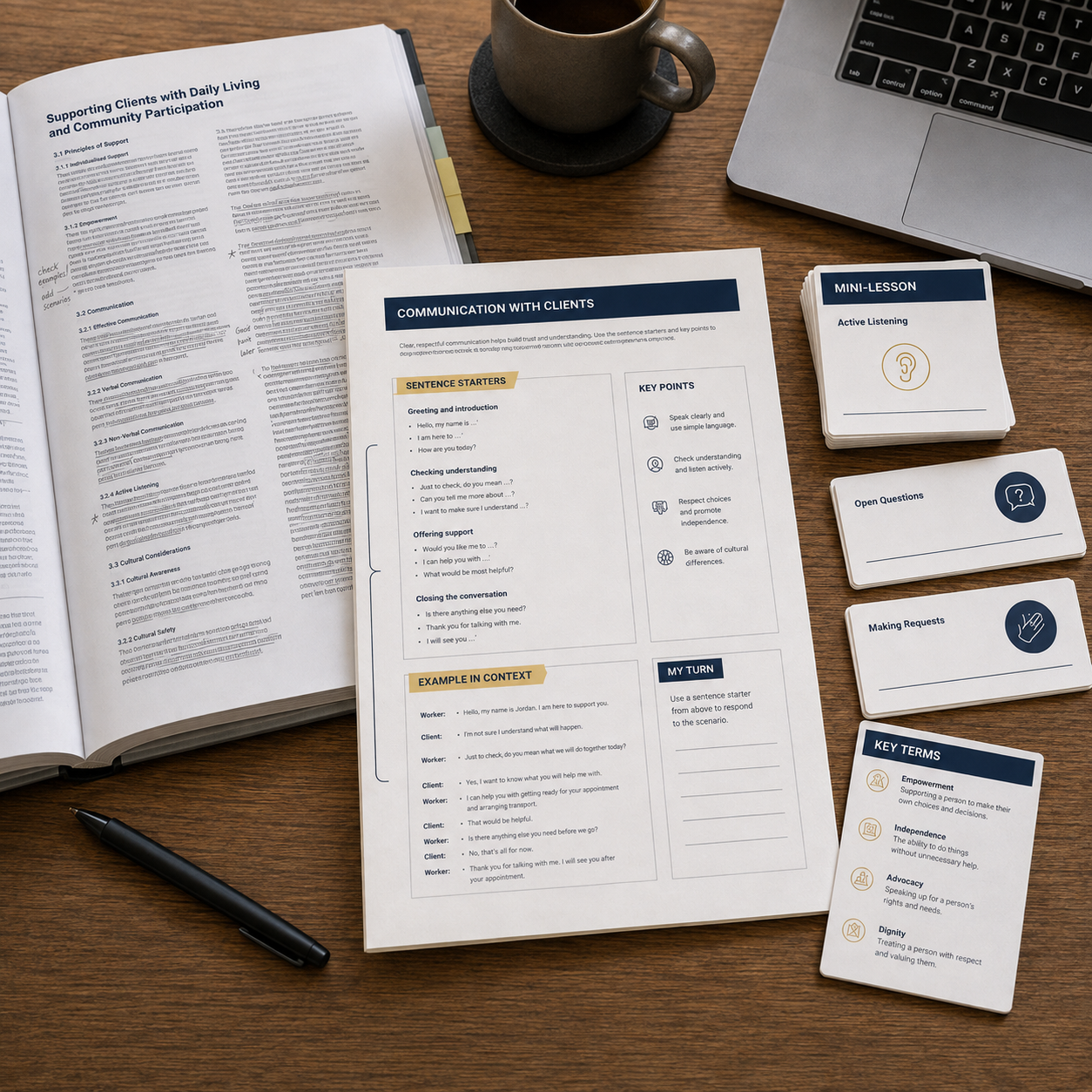 Embedded LND support — Community Services
 Professional writing — Workplace communication
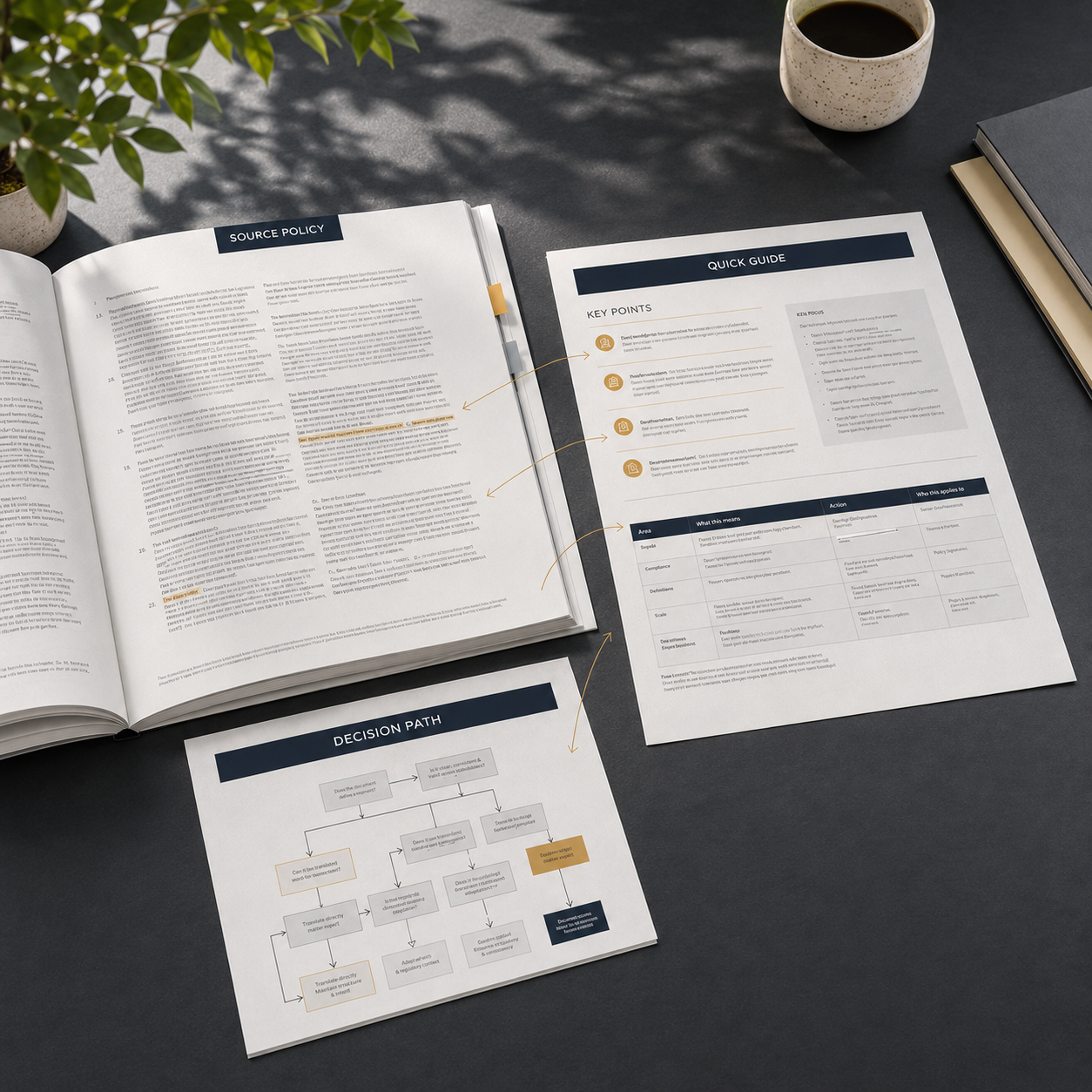 Technical translation — Regulated information
About David
I bring senior professional communication experience to adult education, embedded language, literacy and digital practice, and learning design.
My experience spans health, financial regulation, education, public health, legal and community services, government, telecommunications, science and the environment. That background lets me work with the language of complex professional practice while keeping the real task, audience and operational context in view.
Start a conversation
Tell me about the context, the people involved and the communication challenge. I’ll suggest a practical starting point.
davidmgrant@me.com →